
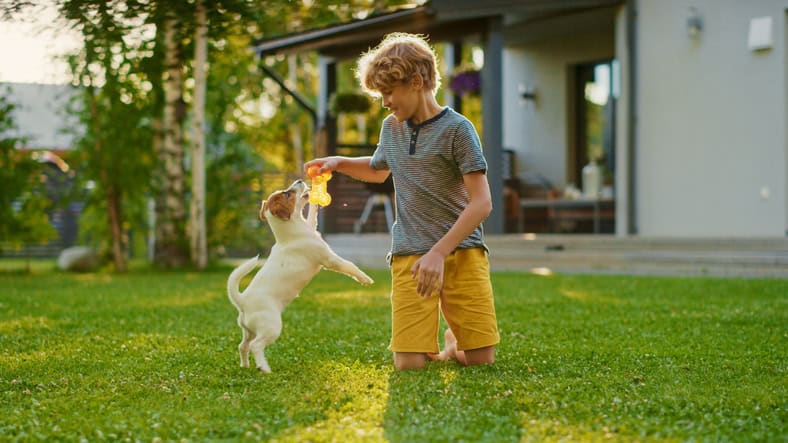
Learning how to train a puppy not to bite is one of the most important parts of early dog training. Nearly all puppies bite or nip during play, especially during their first few months of life.
While this behavior is normal, it can quickly become frustrating if your puppy begins biting hands, clothing, or household items.
Building routines early is important—our guide to the first 30 days with a new puppy explains how to get started.
The good news is that with consistent training and the right techniques, most puppies quickly learn how to control their biting behavior.
In this guide, you’ll learn:
- Why do puppies bite during early development
- How to train a puppy not to bite step-by-step
- Training exercises that reduce biting
- Common Mistakes Puppy Owners Make
With patience and repetition, puppies can learn gentle play and appropriate behavior.
How to Train a Puppy Not to Bite (Quick Steps)
If you want to train a puppy not to bite, follow these simple steps:
- Stop playing when biting happens
- Redirect your puppy to a toy
- Reward gentle play
- Provide regular exercise and stimulation
- Stay consistent with training
These techniques help puppies learn bite inhibition and appropriate play behavior.
Why Puppies Bite
Before learning how to train a puppy not to bite, it helps to understand why puppies bite in the first place.
Biting is a natural part of puppy development.
Common reasons include:
Teething
Puppies experience discomfort as their teeth grow, which often leads to chewing and biting.
Play Behavior
Puppies explore the world with their mouths and may bite during play.
Attention Seeking
Some puppies learn that biting gets attention from their owners.
Excess Energy
A tired puppy is less likely to bite than one with too much energy.
According to the American Kennel Club, bite inhibition training helps puppies learn how to control the strength of their bite during play.
Signs Your Puppy Is Playing Too Rough
Your puppy may need bite training if they:
- nip hands or feet during play
- grab clothing or sleeves
- bite harder as play continues
- Ignore attempts to stop play
These behaviors are common but should be redirected early.
How to Train a Puppy Not to Bite
Teaching bite inhibition requires consistency and patience.
These methods can help most puppies improve their behavior.
1. Stop Play Immediately
When your puppy bites, stop play immediately.
Stand still or remove your hands so the puppy learns that biting ends the fun.
This helps the puppy understand that biting ends the interaction.
2. Redirect to a Toy
Instead of allowing biting on hands or clothing, redirect your puppy to an appropriate chew toy.
Good options include:
- rubber chew toys
- rope toys
- puppy teething toys
Redirecting biting teaches puppies what to chew instead of what not to.
3. Reward Gentle Behavior
Whenever your puppy plays gently without biting, reward them with praise or treats.
Positive reinforcement helps puppies repeat good behavior.
4. Provide Enough Exercise
Puppies with excess energy are more likely to bite.
Make sure your puppy receives:
- regular play sessions
- short training sessions
- mental stimulation
Training and exercise help reduce unwanted behaviors.
5. Stay Consistent
Consistency is critical when training a puppy not to bite.
Everyone in the household should respond to biting the same way so the puppy receives clear signals.
Preventing Future Behavior Problems
Early training helps prevent more serious behavior problems later.
Puppies that learn proper boundaries early are more likely to develop into well-behaved adult dogs.
The first 30 days with a new puppy are especially important for establishing these habits.
You can learn more about early puppy development in our guide on the first 30 days with a new puppy.
Early Leash Training
As your puppy grows, introducing leash training helps build good walking habits.
Puppies that begin leash training early often develop better walking behavior as adults.
Our guide to loose-leash walking training explains how to teach dogs to walk calmly beside their owners.
Building routines early is important—our guide to the first 30 days with a new puppy explains how to get started.
Common Puppy Biting Training Mistakes
Some training mistakes can unintentionally reinforce biting behavior.
Using Hands as Toys
Allowing puppies to play with their hands encourages biting.
Always use toys during play sessions.
Inconsistent Reactions
If some people allow biting while others discourage it, puppies become confused.
Consistency is essential.
Punishing the Puppy
Harsh punishment can create fear and anxiety.
Positive reinforcement works much better for teaching gentle behavior.
Recommended Puppy Training Programs
Some new dog owners prefer structured guidance during early puppy training.
Online courses can help teach obedience, socialization, and behavior management.
One option many dog owners explore is SpiritDog Training, which offers courses focused on:
- puppy training
- obedience training
- leash manners
- building calm focus
👉 Explore the training programs here
Frequently Asked Questions
At what age do puppies stop biting?
Most puppies reduce biting between 4 and 6 months of age as they mature and complete teething.
At what age do puppies stop biting?
Most puppies reduce biting between 4 and 6 months of age as they mature and complete teething.
Should I punish my puppy for biting?
Punishment is not recommended. Instead, redirect the puppy to appropriate toys and reward gentle play.
Should I punish my puppy for biting?
Punishment is not recommended. Instead, redirect the puppy to appropriate toys and reward gentle play.
Why does my puppy bite my hands?
Puppies often bite hands because they see them as play objects. Redirecting to toys helps teach appropriate behavior.
Why does my puppy bite my hands?
Puppies often bite hands because they see them as play objects. Redirecting to toys helps teach appropriate behavior.
Can puppies learn bite inhibition quickly?
Yes. With consistent training, many puppies improve their biting behavior within a few weeks.
Can puppies learn bite inhibition quickly?
Yes. With consistent training, many puppies improve their biting behavior within a few weeks.
Final Thoughts
Learning how to train a puppy not to bite is an essential part of raising a well-behaved dog.
By redirecting biting behavior, rewarding gentle play, and providing consistent training, most puppies quickly develop better habits.
With patience and structure, your puppy will learn appropriate ways to play and interact.
6 thoughts on “How to Train a Puppy Not to Bite (Step-by-Step Guide)”