
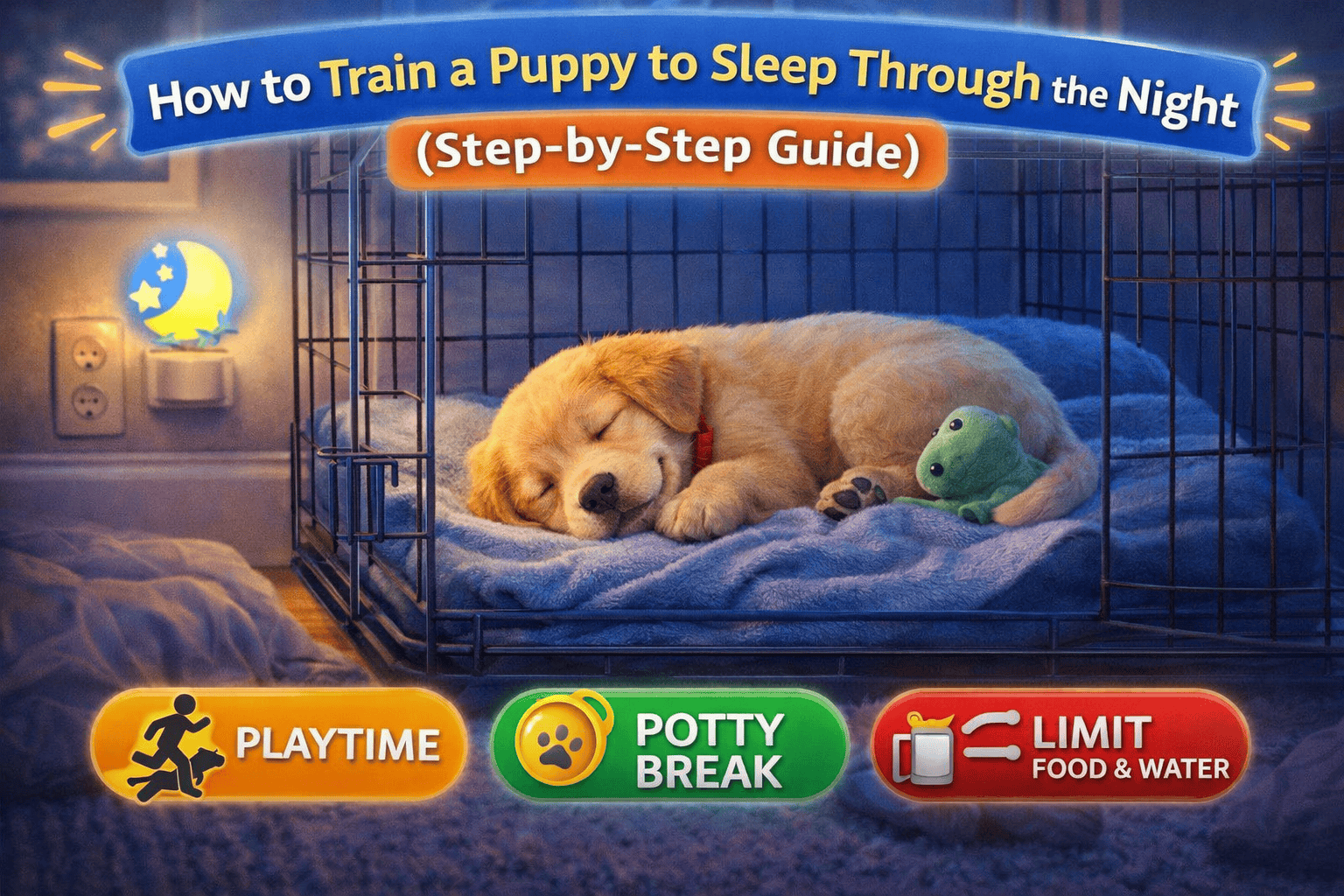
If you’re struggling with sleepless nights, learning puppy sleep training can make a huge difference. Many new puppy owners deal with whining, barking, and frequent nighttime wake-ups.
The good news is that most puppies can learn to sleep through the night with consistent routines and the right approach.
In this guide, you’ll learn:
- Why do puppies wake up at night
- How to train your puppy to sleep through the night
- Simple routines that improve sleep
- Common mistakes to avoid
With patience and consistency, many puppies begin sleeping longer within a few weeks.
Table of Contents
Puppy Sleep Training (Quick Answer)
Puppy sleep training helps puppies develop a consistent nighttime routine so they can sleep longer without waking up. The key is to create a structured evening routine, ensure your puppy is tired before bed, and avoid reinforcing nighttime whining.
To improve your puppy’s sleep:
- Provide exercise before bedtime
- Establish a consistent sleep schedule
- Use crate training for structure
- Limit food and water before bed
- Take your puppy out for a final potty break
Most puppies begin sleeping through the night by 12–16 weeks of age.
Why Puppies Wake Up at Night
Understanding puppy sleep training starts with knowing why puppies wake up.
Common reasons include:
Small Bladders
Young puppies may need to go to the bathroom during the night.
Separation Anxiety
Being alone in a new environment can be stressful.
Excess Energy
Puppies that are not tired may struggle to settle down.
Inconsistent Routine
Irregular schedules can confuse your puppy.
According to the American Kennel Club, puppies need consistent routines to develop healthy sleep patterns and behavior.
How to Train a Puppy to Sleep Through the Night
1. Create a Consistent Bedtime Routine
A consistent routine is one of the most important parts of puppy sleep training.
Your routine might include:
- evening playtime
- a final potty break
- calm downtime before bed
Consistency helps your puppy understand when it’s time to sleep.
2. Use Crate Training
Crate training provides structure and a safe sleeping environment.
A properly introduced crate can help puppies:
- feel secure
- avoid accidents
- settle more easily
Our puppy crate training guide explains how to introduce a crate properly.
The ASPCA recommends using positive reinforcement and structure when helping puppies adjust to new routines.
3. Make Sure Your Puppy Is Tired
A tired puppy sleeps better.
Before bedtime:
- provide playtime
- Do short training sessions
- allow mental stimulation
This reduces nighttime restlessness.
4. Limit Food and Water Before Bed
Avoid feeding your puppy right before bedtime.
This helps reduce nighttime bathroom needs.
However, always ensure your puppy stays hydrated throughout the day.
5. Take a Final Potty Break
A final bathroom trip before bed is essential for puppy sleep training.
This helps prevent overnight accidents.
If needed, follow a puppy potty-training schedule to establish consistent routines.
What to Do if Your Puppy Cries at Night
It’s common for puppies to cry during the first few nights.
If your puppy cries:
- Wait briefly before responding
- Avoid reinforcing attention-seeking behavior
- Ensure their needs are met (potty, comfort)
Over time, most puppies adjust to their new routine.
The Humane Society of the United States suggests avoiding reinforcing whining behavior while ensuring your puppy’s basic needs are met.
Common Puppy Sleep Training Mistakes
Veterinary experts at VCA Animal Hospitals emphasize the importance of consistency when training puppies to sleep through the night.
Responding Immediately to Whining
This can teach your puppy that whining gets attention.
Inconsistent Bedtimes
Irregular routines make it harder for puppies to learn.
Too Much Energy Before Bed
Puppies need both activity and calm time before sleep.
Combining Sleep Training With Other Skills
Sleep improves when overall training improves.
During the first 30 days with a new puppy, building routines helps puppies feel more secure.
Behavior issues like biting can also affect sleep. Our guide on how to train a puppy not to bite explains how to reduce overstimulation.
Socialization also helps puppies feel more comfortable in new environments. Following a puppy socialization checklist supports confidence and calm behavior.
Recommended Training Programs
Some dog owners prefer structured guidance when training their puppy.
Online training programs can help with:
- sleep routines
- crate training
- behavior management
- building calm habits
One option many owners explore is SpiritDog Training, which offers step-by-step programs for raising well-behaved puppies.
👉 Explore the training programs here
Frequently Asked Questions
Why won’t my puppy sleep through the night?
Puppies often wake up due to small bladder capacity, anxiety, or excess energy. A consistent routine helps improve sleep.
Why won’t my puppy sleep through the night?
Puppies often wake up due to small bladder capacity, anxiety, or excess energy. A consistent routine helps improve sleep.
At what age do puppies sleep through the night?
Most puppies begin sleeping through the night between 12 and 16 weeks of age.
At what age do puppies sleep through the night?
Most puppies begin sleeping through the night between 12 and 16 weeks of age.
Should I ignore my puppy crying at night?
If your puppy’s needs are met, ignoring attention-seeking whining can help prevent the behavior from being reinforced.
Should I ignore my puppy crying at night?
If your puppy’s needs are met, ignoring attention-seeking whining can help prevent the behavior from being reinforced.
Should puppies sleep in a crate?
Yes. Crates provide structure and help puppies feel secure during sleep.
Should puppies sleep in a crate?
Yes. Crates provide structure and help puppies feel secure during sleep.
How long does puppy sleep training take?
Most puppies show improvement within 1–2 weeks with consistent routines.
How long does puppy sleep training take?
Most puppies show improvement within 1–2 weeks with consistent routines.
🧠 People Also Ask
Here are answers to common questions about puppy sleep training:
How do I get my puppy to stop waking up at night?
Create a consistent bedtime routine, provide enough exercise, and avoid reinforcing nighttime attention-seeking behavior.
How do I get my puppy to stop waking up at night?
Create a consistent bedtime routine, provide enough exercise, and avoid reinforcing nighttime attention-seeking behavior.
Is it normal for puppies to cry at night?
Yes. Puppies often cry during the first few nights as they adjust to their new environment.
Is it normal for puppies to cry at night?
Yes. Puppies often cry during the first few nights as they adjust to their new environment.
Should I let my puppy sleep in my bed?
Most trainers recommend crate or designated sleeping areas to build independence and structure.
Should I let my puppy sleep in my bed?
Most trainers recommend crate or designated sleeping areas to build independence and structure.
How many hours should a puppy sleep at night?
Puppies typically sleep 6–10 hours at night, depending on their age.
How many hours should a puppy sleep at night?
Puppies typically sleep 6–10 hours at night, depending on their age.
Can a puppy sleep through the night without a crate?
Yes, but crates often make training easier and reduce accidents.
Can a puppy sleep through the night without a crate?
Yes, but crates often make training easier and reduce the risk of accidents.
Final Thoughts
Learning puppy sleep training is an important step in raising a well-behaved dog.
By creating routines, providing structure, and reinforcing calm behavior, most puppies learn to sleep through the night.
With patience and consistency, both you and your puppy can enjoy better sleep.