
Many new dog owners ask the same question: when should you start training a puppy? The answer may surprise you — training can begin almost immediately after bringing your puppy home.
Puppies start learning about their environment from the moment they arrive in a new home. Early training helps puppies develop good habits, build confidence, and prevent common behavior problems.
In this guide, you’ll learn:
- When puppies are ready to begin training
- Which skills to teach first
- How long should training sessions be
- Common training mistakes to avoid
Starting training early helps your puppy grow into a well-behaved adult dog.
When Should You Start Training a Puppy? (Quick Answer)
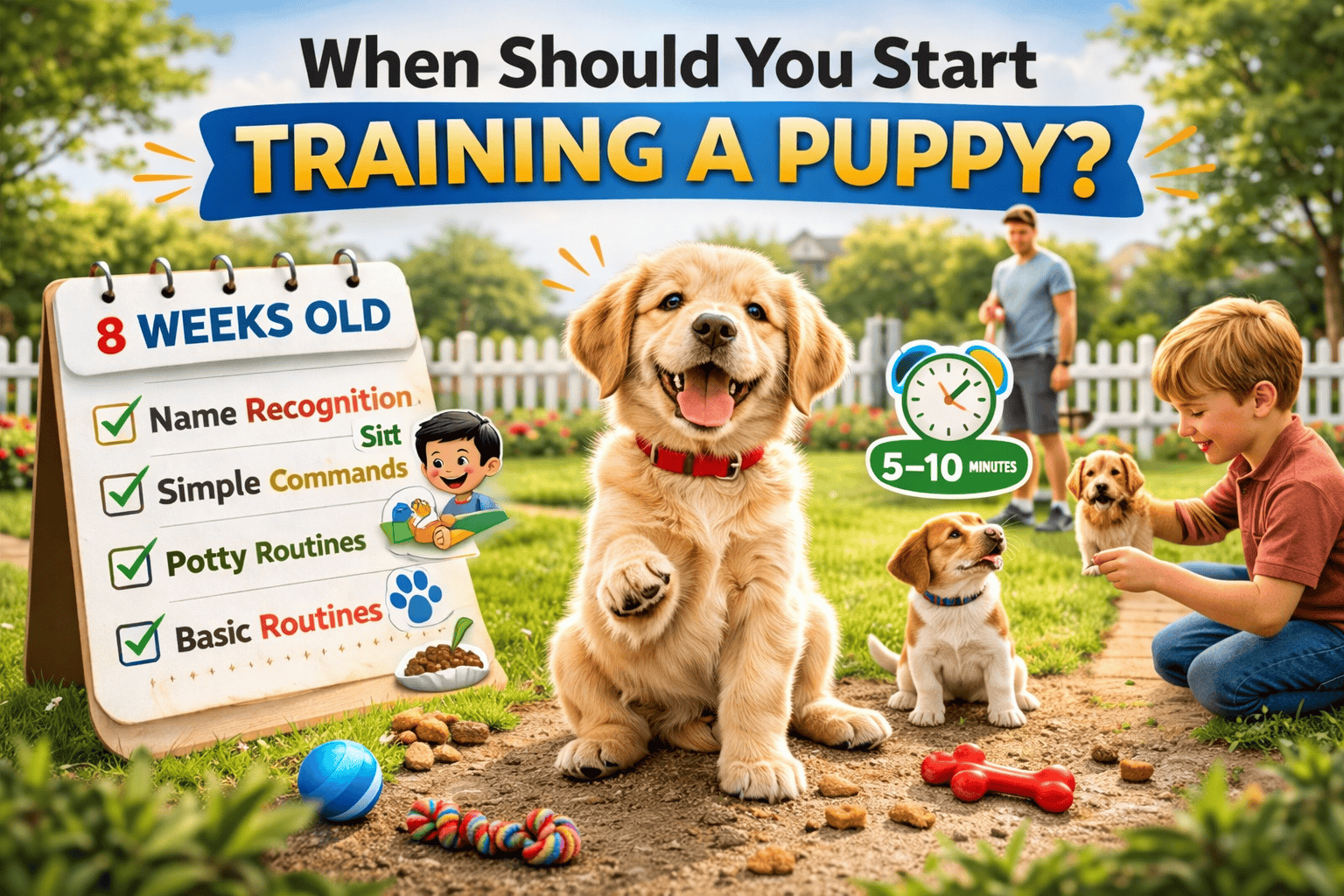
You can start training a puppy as early as 8 weeks old. At this age, puppies are capable of learning basic skills such as:
- responding to their name
- simple commands like “sit.”
- gentle play without biting
- basic potty routines
- short leash introductions
Training sessions should remain short, positive, and consistent.
Why Early Puppy Training Matters
Understanding when you should start training a puppy helps prevent many common behavior problems.
Early training helps puppies learn:
- household routines
- acceptable behavior
- How to interact with people
- How to respond to basic commands
According to the American Kennel Club, puppies begin forming behavioral habits during their early development stages, making early training especially important.
The Best Age to Begin Training
Most puppies come home between 8 and 10 weeks of age, which is an ideal time to begin simple training.
At this stage, focus on:
- building trust
- introducing routines
- rewarding calm behavior
- encouraging gentle play
Training during this early period should focus on positive experiences rather than strict obedience.
First Skills to Teach Your Puppy
When considering when you should start training a puppy, it’s helpful to know which skills should come first.
Name Recognition
Teach your puppy to respond to their name by rewarding them when they look at you.
Potty Training
Establishing routines early helps puppies learn bathroom habits quickly. Our puppy potty training schedule explains how to build consistent routines.
Bite Inhibition
Puppies often nip during play, but early training can reduce this behavior. Our guide on how to train a puppy not to bite explains how to redirect biting.
Socialization
Introducing your puppy to new experiences helps prevent fear-based behaviors. Following a puppy socialization checklist can guide this process.
How Long Should Puppy Training Sessions Be?
Young puppies have short attention spans.
Training sessions should last:
5–10 minutes
Short sessions repeated several times per day are more effective than long sessions.
Ending sessions on a positive note helps puppies stay motivated.
Positive Reinforcement Training
When deciding when you should start training a puppy, the training method matters just as much as the timing.
Positive reinforcement is widely recommended by trainers and veterinarians.
This approach rewards desired behavior using:
- treats
- praise
- toys
Positive reinforcement helps puppies associate training with positive experiences.
Introducing Leash Training
Leash training can begin early with short indoor sessions.
Let your puppy:
- wear a collar or harness
- walk with a loose leash indoors
- receive rewards for calm behavior
Our guide to loose-leash walking training explains how to teach dogs to walk calmly beside their owners.
Common Puppy Training Mistakes
Some mistakes can slow your puppy’s progress.
Waiting Too Long to Start Training
Puppies begin learning immediately, so delaying training can lead to the formation of bad habits.
Long Training Sessions
Short sessions work best for young puppies.
Inconsistent Rules
All family members should follow the same training approach.
Recommended Puppy Training Programs
Some dog owners prefer structured training programs when raising a puppy.
Online courses can guide owners through important early training skills, including:
- obedience training
- socialization
- leash manners
- behavior prevention
One option many owners explore is SpiritDog Training, which offers programs to help puppies develop calm, confident behavior.
👉 Explore the training programs here.
Frequently Asked Questions
Can you train a puppy at 8 weeks old?
Yes. Puppies can begin learning simple skills such as name recognition, sit, and potty routines at 8 weeks old.
Can you train a puppy at 8 weeks old?
Yes. Puppies can begin learning simple skills such as name recognition, sit, and potty routines at 8 weeks old.
What is the first command to teach a puppy?
Many trainers recommend starting with “sit” or teaching the puppy to respond to their name.
What is the first command to teach a puppy?
Many trainers recommend starting with “sit” or teaching the puppy to respond to their name.
How often should you train a puppy?
Short sessions 3–5 times per day are ideal for young puppies.
How often should you train a puppy?
Short sessions, 3–5 times per day, are ideal for young puppies.
Can older puppies still learn training?
Yes. Dogs of any age can learn new behaviors, although early training often produces the best results.
Can older puppies still learn training?
Yes. Dogs of any age can learn new behaviors, although early training often produces the best results.
Final Thoughts
Understanding when to start training a puppy helps new dog owners build strong training habits from the start.
By introducing routines, teaching simple commands, and rewarding positive behavior, puppies quickly learn how to behave in their new home.
With patience and consistency, early training creates a strong foundation for a well-behaved dog.