
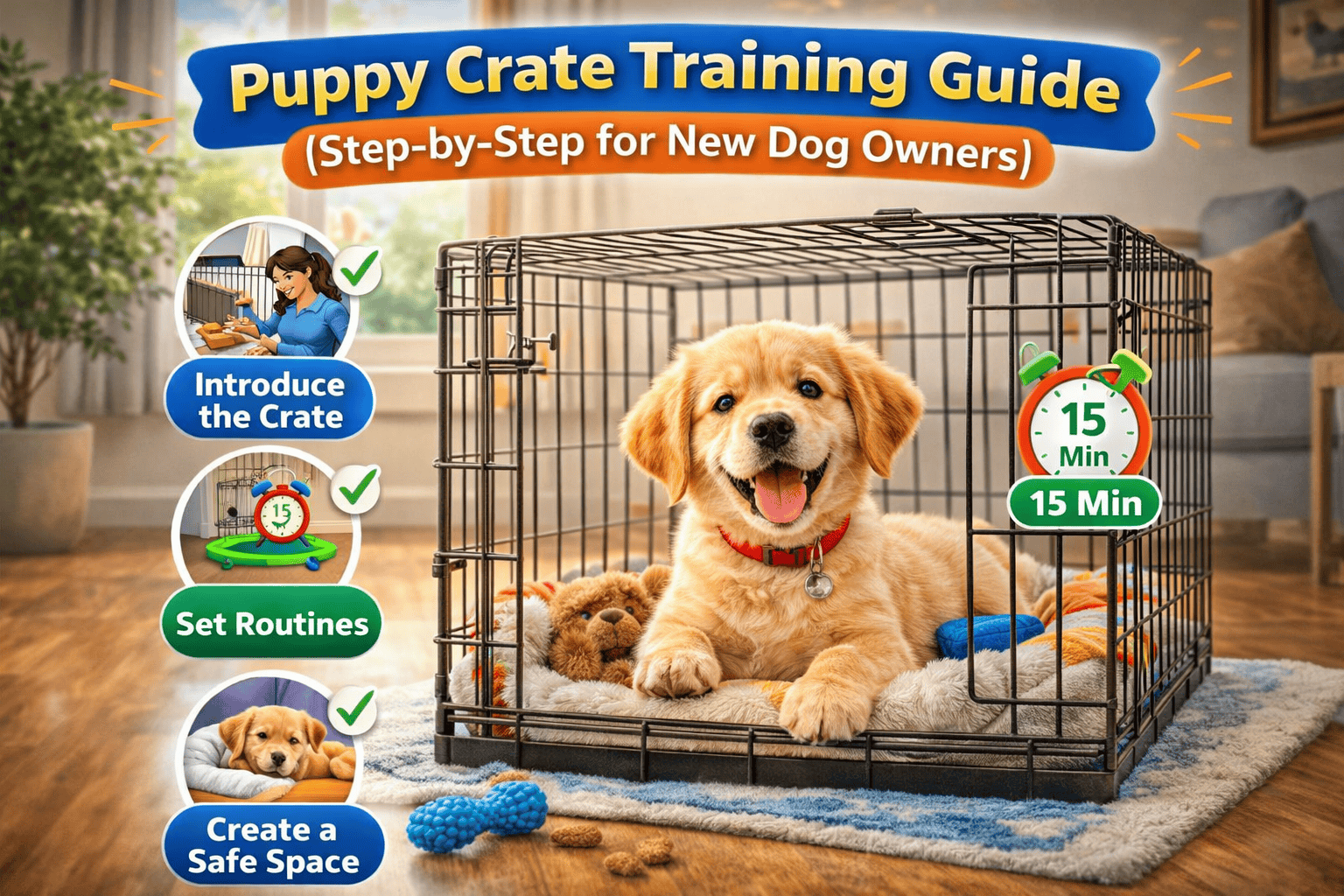
A puppy crate-training guide can help new dog owners create structure, prevent accidents, and provide a safe place for puppies to rest. When introduced properly, a crate becomes a comfortable den where your puppy feels secure.
Many dog owners worry that crate training might feel restrictive for their puppy, but when done correctly, it can actually help puppies feel calmer and develop better habits.
In this puppy crate training guide, you’ll learn:
- Why crate training helps puppies learn faster
- How to introduce a crate step-by-step
- How long can puppies stay in a crate
- Common crate training mistakes to avoid
With patience and consistency, most puppies learn to enjoy their crate within a few weeks.
Table of Contents
Puppy Crate Training Guide (Quick Steps)
If you want to follow a simple puppy crate training guide, start with these steps:
- Choose the right crate size
- Make the crate comfortable and inviting
- Introduce the crate gradually
- Reward calm behavior in the crate
- Build crate time slowly
These steps help puppies associate the crate with safety and relaxation.
Why Crate Training Helps Puppies
Before following a puppy crate training guide, it helps to understand why crate training works so well.
Dogs naturally seek small, secure spaces when they want to rest. A properly introduced crate becomes a den-like environment where puppies feel safe.
Crate training also helps with:
- Potty training
- Preventing destructive chewing
- Creating a consistent routine
- Helping puppies relax when unsupervised
According to the American Kennel Club, crate training is one of the most effective tools for house training and establishing structure for young dogs.
Choosing the Right Crate
An important part of any puppy crate training guide is selecting the correct crate size.
Your puppy should be able to:
- stand up comfortably
- turn around easily
- lie down fully
However, the crate should not be so large that the puppy can use one corner as a bathroom.
Many owners choose adjustable crates that grow with the puppy.
How to Introduce the Crate
Introducing the crate slowly helps puppies feel comfortable instead of anxious.
Start by:
- leaving the crate door open
- placing treats or toys inside
- allowing your puppy to explore freely
Never force your puppy into the crate. The goal is to create positive associations.
Feeding Your Puppy in the Crate
Feeding meals in the crate can help your puppy develop a positive association with the space.
Place the food bowl inside the crate so your puppy begins associating the crate with good experiences.
Over time, your puppy will naturally enter the crate when it’s time to eat.
Building Crate Time Gradually
Once your puppy feels comfortable entering the crate, gradually increase the time spent in the crate.
Start with short sessions of 5–10 minutes while you remain nearby.
Gradually increase the duration as your puppy becomes more relaxed.
This gradual process is an important part of any successful puppy crate training guide.
Crate Training and Potty Training
Crate training often supports a puppy’s potty training schedule because most puppies avoid eliminating where they sleep.
When used correctly, the crate encourages puppies to hold their bladder until they are taken outside.
You can learn more about establishing bathroom routines in our guide on puppy potty training schedules.
How Long Can a Puppy Stay in a Crate?
Crate time depends on the puppy’s age.
General guidelines include:
- 8–10 weeks: about 1 hour
- 3 months: about 2 hours
- 4 months: about 3 hours
Puppies should never be crated for long periods without bathroom breaks.
Preventing Crate Training Problems
Some mistakes can make crate training more difficult.
Using the Crate as Punishment
The crate should always be a positive space.
Leaving Puppies Too Long
Long crate times can create anxiety or accidents.
Rushing the Process
Gradual introductions help puppies feel comfortable.
Early Training Foundations
Crate training works best when combined with other early training routines.
During the first 30 days with a new puppy, building routines and structure helps puppies adjust to their new home.
You can also begin teaching gentle play habits early. Our guide on how to train a puppy not to bite explains how to manage common puppy biting behavior.
Building routines early is important—our guide to the first 30 days with a new puppy explains how to get started.
Recommended Puppy Training Programs
Some dog owners prefer structured guidance when training a new puppy.
Online dog training programs can help owners develop strong training habits during the early months.
One option many dog owners explore is SpiritDog Training, which offers courses focused on:
- puppy training
- obedience training
- leash manners
- improving focus and calm behavior
👉 Explore the training programs here.
Frequently Asked Questions
Is crate training safe for puppies?
Yes. When used correctly, crate training provides a safe and comfortable space for puppies.
Is crate training safe for puppies?
Yes. When used correctly, crate training provides a safe and comfortable space for puppies.
How long does crate training take?
Most puppies become comfortable with their crate within 2–3 weeks of consistent training.
How long does crate training take?
Most puppies become comfortable with their crate within 2–3 weeks of consistent training.
Should puppies sleep in a crate at night?
Many trainers recommend crate sleeping because it helps establish routines and supports potty training.
Should puppies sleep in a crate at night?
Many trainers recommend crate sleeping because it helps establish routines and supports potty training.
What if my puppy cries in the crate?
Short whining periods are normal during early crate training. Gradual training and positive associations help reduce anxiety.
What if my puppy cries in the crate?
Short whining periods are normal during early crate training. Gradual training and positive associations help reduce anxiety.
Final Thoughts
A consistent puppy crate training guide can help your puppy feel safe, develop routines, and learn important habits.
By gradually introducing the crate and reinforcing positive experiences, most puppies learn to view it as a comfortable resting space.
With patience and consistency, crate training becomes one of the most valuable tools for raising a well-behaved dog.
4 thoughts on “Puppy Crate Training Guide (Step-by-Step for New Dog Owners)”