
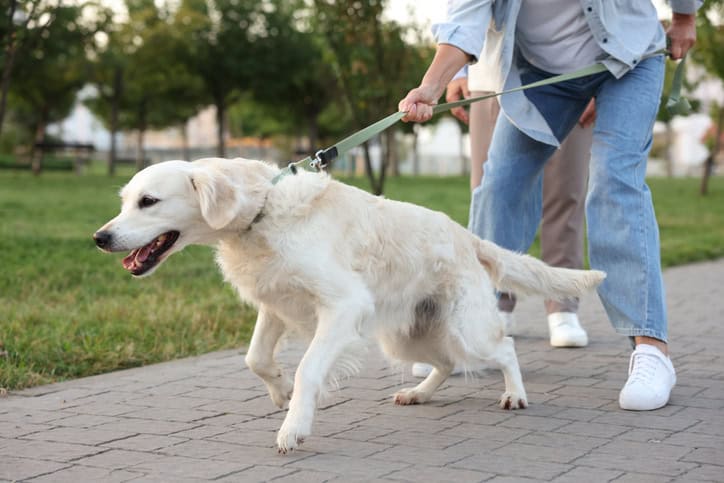
If your dog constantly drags you down the street during walks, you’re not alone. Leash pulling is one of the most common training challenges dog owners face.
Many dogs pull because they are excited, curious, or simply haven’t learned how to walk calmly beside their owner. The good news is that you can stop leash-pulling with the right training techniques and consistency.
In this guide, you’ll learn:
- Why do dogs pull on the leash
- How to stop a dog pulling on the leash step-by-step
- Common training mistakes to avoid
- Tools and programs that can help speed up progress
With patience and the right approach, most dogs can learn to walk calmly on a leash.
If you’re working on improving your dog’s behavior on walks, start with our complete dog leash training guide, which covers pulling, lunging, and reactivity step by step.
Table of Contents
Why Dogs Pull on the Leash
Before you can stop dog pulling on the leash, it helps to understand why dogs pull in the first place.
Dogs naturally walk faster than humans. When a dog pulls and moves forward, they are rewarded by reaching something interesting, such as:
- New smells
- Other dogs
- People
- Exciting environments
From the dog’s perspective, pulling works. Each time they pull, they get closer to what they want, and the behavior becomes reinforced.
According to the American Kennel Club, loose-leash walking is a learned skill that requires repetition and positive reinforcement.
Signs Your Dog Needs Leash Training
Some dogs pull occasionally, while others pull during the entire walk.
Your dog may benefit from leash training if they:
- Constantly pull ahead during walks
- Drag you toward other dogs or people
- Cough or choke on the leash
- Ignore commands while walking
- Become overly excited outside
These behaviors are very common in young dogs and high-energy breeds, but they can happen at any age.
How to Stop Dog Pulling on the Leash
Learning how to stop a dog from pulling on the leash requires patience and consistent practice. These training methods are effective for many dogs.
1. Stop Walking When Your Dog Pulls
One of the most effective ways to stop leash pulling is surprisingly simple.
When your dog pulls:
- Stop walking immediately
- Wait until the leash becomes loose
- Resume walking once your dog relaxes
This teaches your dog that pulling does not move them forward.
Over time, your dog learns that walking calmly keeps the walk going.
2. Reward Loose Leash Walking
Dogs learn faster when good behavior is rewarded.
Whenever your dog walks beside you without pulling:
- Offer a treat
- Use verbal praise
- Continue moving forward
This positive reinforcement helps your dog associate calm walking with rewards.
3. Practice in Low-Distraction Areas
Many dogs struggle with leash training because the environment is overwhelming.
Start training in calm areas such as:
- Your backyard
- A quiet street
- A calm park
Once your dog improves, gradually introduce more distractions.
This step-by-step approach makes it easier to stop dog pulling on the leash in real-world environments.
4. Teach Your Dog to Check In With You
Dogs that constantly scan their surroundings are more likely to pull.
Encourage your dog to focus on you during walks.
Reward your dog when they:
- Look at you during the walk
- Walk beside you voluntarily
- Respond to their name
These “check-ins” help strengthen the connection between you and your dog during walks.
5. Keep Training Sessions Short and Consistent
Consistency is one of the most important factors in leash training.
Instead of long training sessions, practice during every walk.
Short, regular training moments help your dog clearly understand what behavior is expected.
Common Mistakes When Trying to Stop Dog Pulling on the Leash
Many dog owners unknowingly reinforce leash pulling. Avoid these common mistakes.
Moving Too Fast
Expecting perfect leash behavior immediately often leads to frustration.
Dogs need time and repetition to learn new habits.
Allowing Pulling Sometimes
If pulling occasionally gets your dog where they want to go, the behavior becomes reinforced.
Consistency is critical.
Using Harsh Corrections
Punishment or harsh leash corrections can increase stress and anxiety.
Most professional trainers recommend positive reinforcement training instead.
Organizations like the Humane Society emphasize reward-based training methods for long-term behavior change.
Recommended Training Programs for Leash Pulling
Some dog owners find it easier to follow a structured training program when learning how to stop their dog from pulling on the leash.
Online training courses can guide you step by step through the process and help address common leash issues.
One option many owners explore is SpiritDog Training, which offers programs focused on:
- Loose leash walking
- Everyday obedience
- Reactive dog behavior
- Building stronger focus during walks
👉 Explore the SpiritDog training programs here.
How Long Does It Take to Stop Dog Pulling on the Leash?
Some dogs improve within a few weeks, while others require several months of consistent training.
Progress depends on factors such as:
- The dog’s age
- Energy level
- Training consistency
- Previous habits
The most important factor is regular practice during daily walks.
With consistency, most dogs can learn to walk calmly on a leash.
Quick Summary: How to Stop Dog Pulling on the Leash
If your dog constantly pulls during walks, remember these key steps:
- Stop walking when the leash becomes tight
- Reward calm walking beside you
- Practice in low-distraction environments
- Encourage your dog to check in with you
- Stay consistent during every walk
With patience and repetition, many dogs learn to walk politely beside their owner.
Frequently Asked Questions
Why does my dog pull so hard on the leash?
Dogs pull because moving forward is rewarding. When pulling helps them reach something interesting, like a smell or another dog, the behavior becomes reinforced.
Why does my dog pull so hard on the leash?
Dogs pull because moving forward is rewarding. When pulling helps them reach something interesting, like a smell or another dog, the behavior becomes reinforced.
Do dogs grow out of leash pulling?
Most dogs do not naturally outgrow leash pulling. They usually need consistent training to learn loose leash walking.
Do dogs grow out of leash pulling?
Most dogs do not naturally outgrow leash pulling. They usually need consistent training to learn loose leash walking.
What is loose leash walking?
Loose-leash walking means the leash remains relaxed while the dog walks beside the owner rather than pulling ahead.
What is loose leash walking?
Loose-leash walking means the leash remains relaxed while the dog walks beside the owner rather than pulling ahead.
Should I stop walking when my dog pulls?
Yes. Stopping when your dog pulls teaches them that pulling does not move them forward.
Should I stop walking when my dog pulls?
Yes. Stopping when your dog pulls teaches them that pulling does not move them forward.
Where can I learn more about leash training?
Many dog owners follow structured training programs to improve leash behavior.
👉 View the SpiritDog courses here.
Where can I learn more about leash training?
Many dog owners follow structured training programs to improve leash behavior.
👉 View the SpiritDog courses here.
Final Thoughts
Leash pulling is a common challenge for many dog owners, but it can improve with the right training approach.
By learning how to stop dog pulling on the leash and consistently rewarding calm walking behavior, you can transform stressful walks into enjoyable experiences.
With time, patience, and practice, most dogs learn to walk politely beside their owner.
8 thoughts on “How to Stop Dog Pulling on the Leash (Step-by-Step Guide)”