
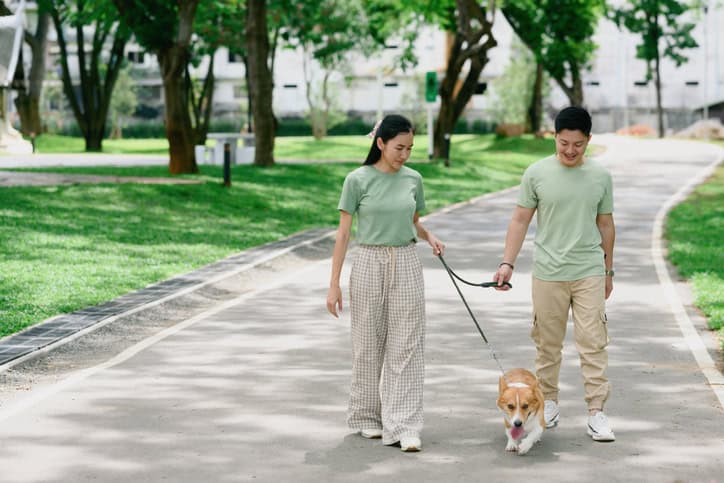
A dog pulling toward other dogs on walks is a very common challenge many dog owners face. When a dog becomes excited or fixated on other dogs, it may suddenly pull hard on the leash to approach them.
When a dog pulls toward other dogs on walks, it usually means the dog is excited, frustrated, or overwhelmed by their presence.
If you’re working on improving your dog’s behavior on walks, start with our complete dog leash training guide, which covers pulling, lunging, and reactivity step by step.
This behavior can make walks stressful and difficult to manage, especially if your dog drags you toward every dog they see.
The good news is that with consistent training and the right techniques, you can teach your dog to stay calm and focused during walks.
In this guide, you’ll learn:
- why dogs pull toward other dogs on walks
- How to stop the behavior step-by-step
- training exercises that improve focus
- common mistakes dog owners make
With patience and regular practice, many dogs learn to walk calmly without pulling toward other dogs.
Before trying to stop the behavior, it helps to understand why dogs pull toward other dogs.
Most dogs pull because they feel strong excitement or frustration when they see another dog.
Common reasons include:
Excitement
Many dogs simply want to greet the other dog and become overly excited.
Frustration
When a dog wants to approach another dog but is held back by the leash, frustration can build.
Lack of Training
Dogs that have not been taught proper leash manners often pull toward anything that interests them.
Early Social Experiences
Some dogs learned early that pulling on the leash leads to greeting other dogs, which reinforces the behavior.
According to the American Kennel Club, leash frustration is a common reason dogs react strongly when they encounter other dogs during walks.
Key Tips If Your Dog Pulls Toward Other Dogs on Walks
If your dog pulls toward other dogs on walks, these training tips can help improve leash behavior:
- increase distance from other dogs
- Reward calm behavior immediately
- Teach your dog to focus on you
- Practice loose leash walking regularly
- Avoid allowing pulling to lead to greetings
With consistent training, many dogs learn to stay calm when they encounter other dogs during walks.
Table of Contents
Signs Your Dog Is Fixated on Other Dogs
Your dog may be overly focused on other dogs if they:
- Suddenly pull hard toward another dog
- stare intensely at approaching dogs
- Ignore commands during encounters
- bark or whine when seeing another dog
These behaviors often appear before pulling or lunging begins.
If your dog also lunges suddenly, our guide on how to stop dog lunging on walks explains additional training techniques that can help reduce this behavior.
How to Stop a Dog That Pulls Toward Other Dogs on Walks
Training your dog to remain calm around other dogs requires patience and repetition.
These methods can help many dogs improve their behavior.
Training Tips to Improve Leash Behavior
Training becomes much easier once you understand why a dog pulls toward other dogs on walks and how to redirect your dog’s attention back to you.
1. Increase Distance From Other Dogs
Distance is one of the most powerful training tools.
If your dog reacts strongly when another dog is nearby, increase the distance until your dog remains calm.
You may need to:
- cross the street
- Step off the path
- Pause and allow the other dog to pass
Training works best when your dog is aware of the other dog but not overwhelmed.
2. Reward Calm Behavior
Whenever your dog notices another dog but stays calm, reward the behavior immediately.
You can use:
- treats
- praise
- toys
This teaches your dog that calm behavior is more rewarding than pulling.
3. Teach Your Dog to Focus on You
Dogs that pull toward other dogs often become completely focused on the distraction.
Practice rewarding your dog when they:
- Look at you during walks
- Respond to their name
- walk calmly beside you
These focus exercises help redirect your dog’s attention away from other dogs.
If leash-pulling is also an issue, our guide to loose-leash walking training explains how to teach dogs to walk politely beside you.
4. Avoid Letting Pulling Lead to Greetings
One of the most common mistakes is allowing a dog to greet another dog after pulling.
If pulling leads to a greeting, the dog learns that pulling works.
Instead, only allow greetings when your dog approaches calmly.
5. Practice Consistent Leash Training
Improving leash manners is an important part of reducing this behavior.
If your dog frequently pulls on the leash, you may want to read our guide on how to stop a dog from pulling on the leash, which explains several techniques to improve leash control.
Some dogs that pull toward other dogs may also be leash-reactive. In that case, our guide on training a reactive dog on walks provides additional strategies.
Does Equipment Help With This Problem?
Training is the most important factor, but equipment can also improve control.
Many dog owners find that front-clip harnesses provide better control when working with dogs that pull strongly.
If your dog pulls toward other dogs on walks, using a front-clip harness can give you better control while you work on training.
If you are considering new equipment, our guide on the best harness for dogs that pull explains how different harness designs can help reduce pulling.
Common Mistakes When Training Dogs Around Other Dogs
Some training mistakes can unintentionally reinforce pulling behavior.
Allowing Overexcitement
If your dog becomes extremely excited around other dogs, allowing greetings every time can reinforce the behavior.
Getting Too Close Too Quickly
Training works best when dogs remain below their excitement threshold.
Gradually decrease the distance as your dog improves.
Inconsistent Training
Consistency is one of the most important factors in leash training. Practicing calm walking during every walk helps reinforce good behavior.
Recommended Training Programs
Some dog owners prefer following a structured training program when addressing leash behavior problems.
Online training courses can guide owners through exercises designed to improve focus, calmness, and leash manners.
One option many dog owners explore is SpiritDog Training, which offers courses focused on:
- leash training
- reactive dog behavior
- obedience training
- improving focus during walks
👉 Explore the training programs here
Frequently Asked Questions
Why does my dog pull toward other dogs on walks?
Most dogs pull toward other dogs because they feel excited or frustrated. Teaching calm leash behavior helps reduce this reaction.
Why does my dog pull toward other dogs on walks?
Most dogs pull toward other dogs because they feel excited or frustrated. Teaching calm leash behavior helps reduce this reaction.
Should I let my dog greet other dogs on walks?
Only allow greetings when your dog approaches calmly. Allowing greetings after pulling can reinforce the behavior.
Should I let my dog greet other dogs on walks?
Only allow greetings when your dog approaches calmly. Allowing greetings after pulling can reinforce the behavior.
Can dogs learn to ignore other dogs?
Yes. With consistent training and focus exercises, many dogs learn to stay calm around other dogs during walks.
Can dogs learn to ignore other dogs?
Yes. With consistent training and focus exercises, many dogs learn to stay calm around other dogs during walks.
Can a harness stop my dog from pulling toward other dogs?
A harness can improve control, but training is still necessary to teach dogs how to behave calmly during walks.
Can a harness stop my dog from pulling toward other dogs?
A harness can improve control, but training is still necessary to teach dogs how to behave calmly during walks.
Final Thoughts
When a dog pulls toward other dogs on walks, it may seem difficult to manage at first, but consistent training can significantly improve your dog’s behavior.
When a dog pulls toward other dogs on walks, it usually means the dog is overly excited or frustrated.
By increasing distance from triggers, rewarding calm behavior, and practicing consistent leash training, many dogs learn to stay relaxed around other dogs.
With patience and regular practice, walks can become much calmer and more enjoyable.
1 thought on “Why Dogs Pull Toward Other Dogs on Walks”