
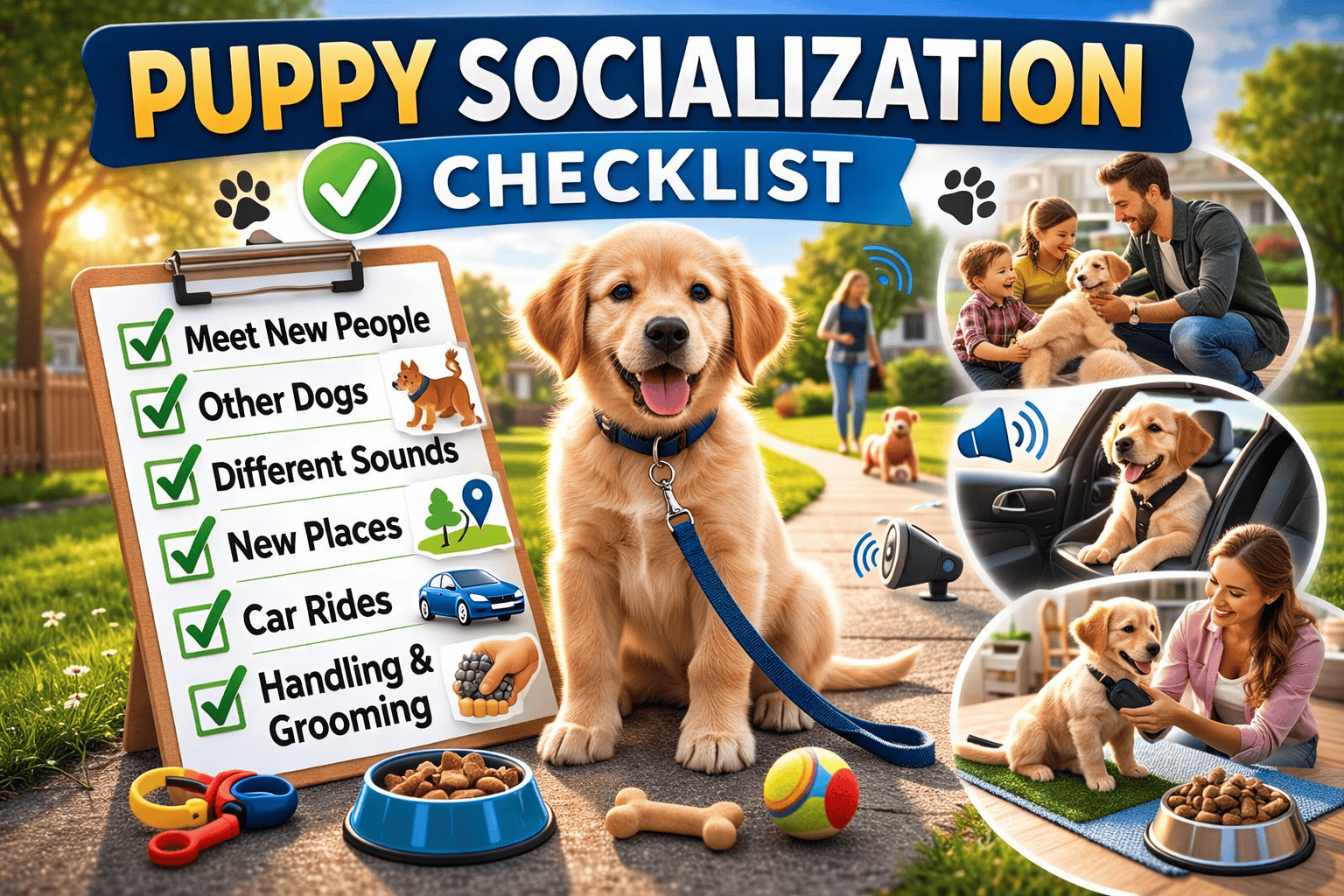
A puppy socialization checklist helps ensure your puppy develops confidence and positive behavior around people, animals, and new environments. Proper socialization during the early months of a puppy’s life plays a major role in preventing fear, anxiety, and behavior problems later.
Many dog owners assume socialization simply means letting their puppy meet other dogs. In reality, good socialization involves exposing your puppy to many different experiences in a positive and controlled way.
Building routines early is important—our guide to the first 30 days with a new puppy explains how to get started.
In this guide, you’ll learn:
- What a puppy socialization checklist includes
- When should puppies begin socialization
- safe ways to introduce new experiences
- Common socialization mistakes to avoid
Following a structured puppy socialization checklist can help your puppy grow into a confident and well-adjusted adult dog.
Socialization is especially important during the first 30 days with a new puppy, when puppies are adjusting to their new environment and learning routines.
According to the American Veterinary Society of Animal Behavior, early puppy socialization is one of the most important steps in preventing fear and aggression later in life.
Puppy Socialization Checklist (Quick Answer)
A puppy socialization checklist helps introduce puppies to new experiences in a safe and positive way during early development. Proper socialization typically includes exposure to different people, environments, sounds, and friendly dogs while rewarding calm behavior.
Key items in a puppy socialization checklist include:
- meeting different types of people
- exposure to household sounds and new environments
- gentle handling of paws, ears, and mouth
- short car rides and outdoor experiences
- positive interactions with calm, vaccinated dogs
Most experts recommend beginning puppy socialization between 3 and 14 weeks of age, when puppies are most open to learning about new experiences.
Table of Contents
Puppy Socialization Checklist (Quick Overview)
A basic puppy socialization checklist should include introducing your puppy to:
- different types of people
- friendly, vaccinated dogs
- new environments and surfaces
- common household sounds
- car rides and short outings
- gentle handling and grooming
Positive experiences during these early exposures help puppies learn that the world is safe.
Why Puppy Socialization Is Important
Before using a puppy socialization checklist, it helps to understand why socialization matters so much.
Puppies go through a critical learning period during their early development. During this time, their brains are highly receptive to new experiences.
If puppies are not properly socialized, they may develop fear-based behaviors such as:
- barking at strangers
- fear of unfamiliar environments
- anxiety around other dogs
- nervousness during handling
According to the American Veterinary Society of Animal Behavior, early socialization is one of the most important steps in preventing future behavior problems.
Early socialization also helps reduce behavior issues such as nipping. Our guide on how to train a puppy not to bite explains how to redirect biting behavior.
When to Start Socializing Your Puppy
A good puppy socialization checklist begins early.
Most experts recommend starting socialization between 3 and 14 weeks of age, when puppies are most open to new experiences.
However, socialization should always be done safely, especially before vaccinations are complete.
Safe early socialization activities include:
- inviting calm visitors to your home
- exposing your puppy to household sounds
- carrying your puppy to observe new environments
The American Kennel Club explains that proper socialization helps puppies develop confidence in unfamiliar environments.
Veterinary experts at VCA Animal Hospitals recommend introducing puppies to different sounds and environments during early development.
Puppy Socialization Checklist: People
Your puppy should become comfortable around a wide variety of people.
Try introducing your puppy to people who are:
- different ages
- wearing hats or sunglasses
- using walking aids
- moving quickly or slowly
The goal is to help your puppy learn that people come in many forms and are not to be feared.
Puppy Socialization Checklist: Environments
Expose your puppy gradually to new environments.
Examples include:
- sidewalks and parks
- pet-friendly stores
- quiet streets
- car rides
Short and positive experiences are best during early socialization.
Puppy Socialization Checklist: Sounds
Many puppies develop a fear of loud noises if they are not gradually introduced to them.
Your puppy socialization checklist should include exposure to sounds such as:
- doorbells
- vacuum cleaners
- traffic noise
- household appliances
Reward calm behavior so your puppy associates these sounds with positive experiences.
Puppy Socialization Checklist: Handling
Handling exercises help puppies become comfortable with grooming and veterinary care.
Practice gently touching your puppy’s:
- paws
- ears
- mouth
- tail
Short handling sessions paired with treats help puppies learn that these interactions are safe.
Socializing Your Puppy With Other Dogs
Meeting friendly dogs can be a valuable part of a puppy socialization checklist.
However, these interactions should be carefully supervised.
Choose dogs that are:
- calm
- well-socialized
- vaccinated
Avoid dog parks until your puppy is older and fully vaccinated.
Combining Socialization With Early Training
Socialization works best when combined with early training routines.
During the first 30 days with a new puppy, establishing structure and positive experiences helps puppies adjust to their new home.
Early training also helps prevent common behavior issues such as biting. Our guide on how to train a puppy not to bite explains how to redirect nipping behavior.
As your puppy grows, leash training becomes increasingly important. Our guide to loose-leash walking training explains how to teach calm walking habits.
Common Puppy Socialization Mistakes
Some mistakes can slow your puppy’s progress.
Overwhelming the Puppy
Too many new experiences at once can cause fear instead of confidence.
Forcing Interactions
Allow your puppy to approach new experiences at their own pace.
Skipping Socialization
Puppies that lack early exposure often develop fear or reactivity later.
Recommended Puppy Training Programs
Some dog owners prefer structured guidance when raising a puppy.
Online training courses can help owners guide their dogs through socialization, obedience training, and early behavior development.
One option many dog owners explore is SpiritDog Training, which offers programs focused on:
- puppy training
- obedience training
- leash manners
- building calm focus
👉 Explore the training programs here.
Frequently Asked Questions
What is a puppy socialization checklist?
A puppy socialization checklist is a guide that helps introduce puppies to different people, environments, sounds, and experiences during early development.
What is a puppy socialization checklist?
A puppy socialization checklist is a guide that helps introduce puppies to different people, environments, sounds, and experiences during early development.
When should puppy socialization begin?
Most experts recommend beginning socialization between 3 and 14 weeks of age.
When should puppy socialization begin?
Most experts recommend beginning socialization between 3 and 14 weeks of age.
Can older puppies still be socialized?
Yes. While early socialization is ideal, older puppies can still learn confidence through gradual positive exposure.
Can older puppies still be socialized?
Yes. While early socialization is ideal, older puppies can still learn confidence through gradual positive exposure.
Should puppies meet many dogs during socialization?
Puppies should meet a few calm, friendly dogs rather than many unfamiliar dogs at once.
Should puppies meet many dogs during socialization?
Puppies should meet a few calm, friendly dogs rather than many unfamiliar dogs at once.
Final Thoughts
Using a structured puppy socialization checklist helps ensure your puppy develops confidence and healthy behavior.
By introducing your puppy to new people, environments, and experiences in a positive way, you can prevent many common behavior problems.
With patience and consistency, early socialization helps your puppy grow into a calm and well-adjusted dog.
5 thoughts on “Puppy Socialization Checklist (Complete Guide for New Dog Owners)”