
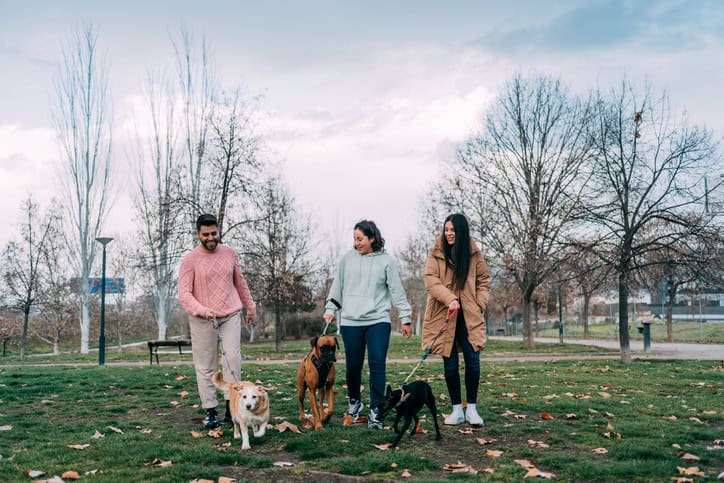
A proper dog leash training guide can transform daily walks from frustrating battles into calm, enjoyable experiences. Many dog owners struggle with common walking problems such as pulling, lunging, barking, or reacting to other dogs.
The good news is that most leash behavior issues can be improved with consistent training and the right techniques.
This complete dog leash training guide will walk you through:
- why dogs pull on the leash
- How to teach loose leash walking
- How to stop lunging and reactivity
- training methods that improve focus
- equipment that can help during training
If you practice these techniques consistently, most dogs learn to walk calmly beside their owner.
What Is Dog Leash Training?
Dog leash training teaches your dog how to walk politely on a leash without pulling, lunging, or reacting to distractions.
A well-trained dog should be able to:
- walk beside their owner calmly
- Keep the leash relaxed instead of tight
- respond to cues during walks
- remain calm around other dogs and people
According to the American Kennel Club, leash walking is a learned behavior that requires patience and consistent reinforcement.
Why Dogs Pull on the Leash
Before starting any dog leash training, it helps to understand why dogs pull during walks.
Dogs naturally move faster than humans and are highly curious about their environment. When pulling helps them reach something interesting—like a smell or another dog—the behavior becomes rewarding.
Common reasons dogs pull include:
- excitement during walks
- curiosity about new smells
- frustration from being restrained
- lack of training
If your dog pulls constantly during walks, start with our guide on how to stop a dog from pulling on the leash, which explains several effective training methods.
Loose Leash Walking Training
One of the most important skills in any dog leash training guide is teaching loose leash walking.
Loose-leash walking means the leash remains relaxed while the dog walks beside you rather than pulling ahead.
Key training steps include:
- Stopping when your dog pulls
- rewarding calm walking
- practicing in quiet environments
- encouraging your dog to focus on you
For a complete walkthrough, see our article on loose leash walking training.
How to Stop Dog Lunging on Walks
Some dogs suddenly lunge toward other dogs, people, or moving objects during walks.
Lunging often occurs when a dog becomes overwhelmed by excitement or frustration.
Key strategies include:
- creating distance from triggers
- rewarding calm behavior
- teaching focus exercises
- Practicing consistent leash training
For more detailed training steps, read how to stop dog lunging on walks.
Training Reactive Dogs on Walks
Dogs that bark, lunge, or become highly excited around other dogs may be experiencing leash reactivity.
Reactive dogs can still improve with the right training techniques.
Important training methods include:
- managing distance from triggers
- rewarding calm reactions
- improving focus on the owner
- gradually reducing exposure distance
If your dog struggles with reactivity, see our guide to training a reactive dog on walks.
When Dogs Pull Toward Other Dogs
Many dogs become overly excited when they see another dog during walks.
This behavior often causes dogs to pull strongly toward other dogs.
Training can help reduce this excitement by teaching dogs to remain calm and focused.
For step-by-step guidance, see “Dog Pulls Toward Other Dogs on Walks.”
Teaching Dogs to Ignore Other Dogs
Another important part of leash training is helping dogs stay calm around distractions.
Many dogs become fixated on other dogs, which leads to pulling or barking.
Training exercises can help redirect your dog’s attention back to you.
Our article on how to train a dog to ignore other dogs explains effective training strategies.
Equipment That Helps With Leash Training
While training is the most important factor, equipment can make leash training easier.
Many trainers recommend front-clip harnesses for dogs that pull strongly.
Front-clip harnesses help redirect the dog’s movement when they pull forward.
If you’re considering equipment options, see our guide on the best harness for dogs that pull.
Common Dog Leash Training Mistakes
Some mistakes can slow progress during leash training.
Inconsistent Training
Allowing pulling sometimes teaches the dog that pulling works.
Training in Overwhelming Environments
Busy areas may overwhelm dogs that are still learning leash skills.
Expecting Immediate Results
Most dogs improve gradually with consistent training.
Recommended Dog Training Programs
Some owners prefer following a structured training program when working on leash behavior.
Online dog training courses can guide owners through exercises designed to improve focus and calm behavior during walks.
One option many dog owners explore is SpiritDog Training, which offers courses focused on:
- leash training
- reactive dog behavior
- obedience training
- improving focus during walks
👉 Explore the training programs here
Frequently Asked Questions
How long does dog leash training take?
Some dogs improve within a few weeks, while others require several months of consistent training.
How long does dog leash training take?
Some dogs improve within a few weeks, while others require several months of consistent training.
Can older dogs learn leash training?
Yes. Dogs of any age can learn improved leash behavior with regular practice.
Can older dogs learn leash training?
Yes. Dogs of any age can learn improved leash behavior with regular practice.
Should I stop walking when my dog pulls?
Yes. Stopping when the leash becomes tight helps teach your dog that pulling does not move them forward.
Should I stop walking when my dog pulls?
Yes. Stopping when the leash becomes tight helps teach your dog that pulling does not move them forward.
Does a harness stop pulling completely?
A harness improves control, but training is still necessary to teach calm walking behavior.
Does a harness stop pulling completely?
A harness improves control, but training is still necessary to teach calm walking behavior.
Final Thoughts
A consistent dog leash training guide can help solve many common walking problems.
By teaching loose-leash walking, managing distractions, and rewarding calm behavior, many dogs learn to walk politely beside their owners.
With patience and regular practice, daily walks can become far more enjoyable for both you and your dog.